Choosing interior doors for a construction project may seem straightforward, but for developers, contractors, distributors, and importers, the decision involves much more than selecting a color or design.
A complete interior door system must match the project’s requirements for appearance, dimensions, durability, installation, maintenance, budget, and quantity. This is especially important for large residential and commercial developments where hundreds or even thousands of door sets may be required.
Among the available options, melamine door sets have become a practical choice for modern interior projects because they offer a combination of design flexibility, consistent factory production, durable surfaces, and competitive cost.
So, what should buyers consider when choosing a melamine door set?
1. Start with the Application
The first step is to determine where the doors will be installed.
A bedroom door in a residential apartment has different performance requirements from a hotel guest-room door or an office door. Project type, frequency of use, environmental conditions, design expectations, and local building requirements should therefore be considered before the door specification is finalized.
For example, residential projects may place greater emphasis on design and cost efficiency, while hotels and commercial buildings may require greater attention to durability, acoustic performance, hardware configuration, and fire-related specifications.
Understanding the application first makes it easier to select the appropriate door structure.
2. Select the Appropriate Door Core
The surface is only one part of a complete door.
The internal structure influences the door’s weight, strength, stability, acoustic characteristics, and overall cost. Depending on the product design and project specification, engineered interior doors may use different core constructions.
Buyers should discuss expected performance with the manufacturer rather than selecting a door based only on surface appearance.
For large projects, it is also important to keep the internal construction consistent throughout production. Clear technical specifications and sample confirmation before mass production can help ensure that every batch follows the approved standard.
3. Choose a Surface That Matches the Interior Design
One of the biggest advantages of melamine doors is the wide variety of decorative surfaces available.
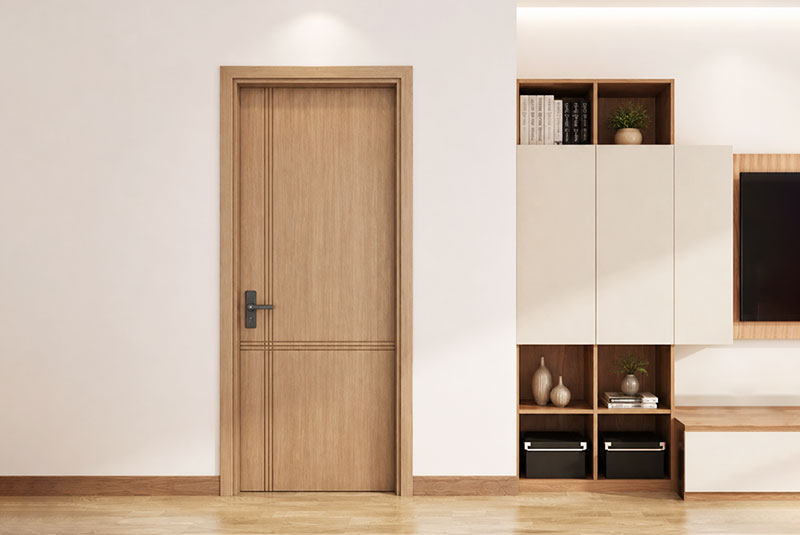
Wood-grain finishes remain especially popular because they provide the warm appearance associated with natural timber while offering the consistency of an engineered decorative surface.
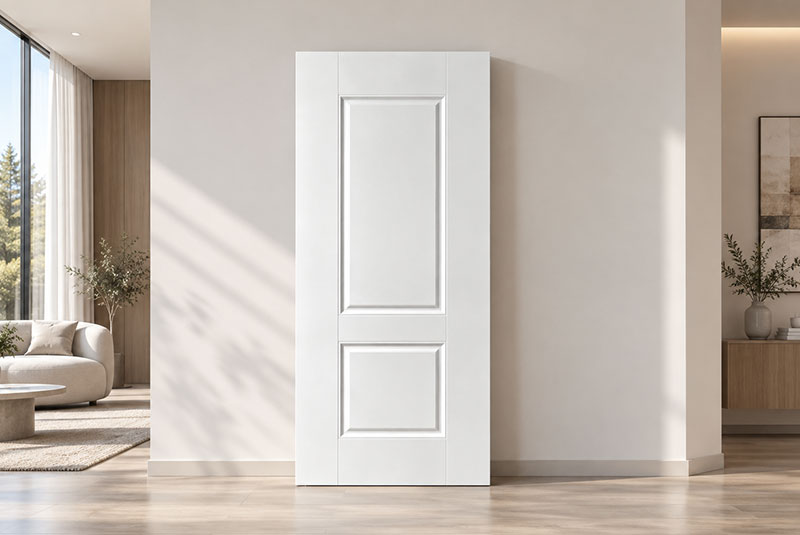
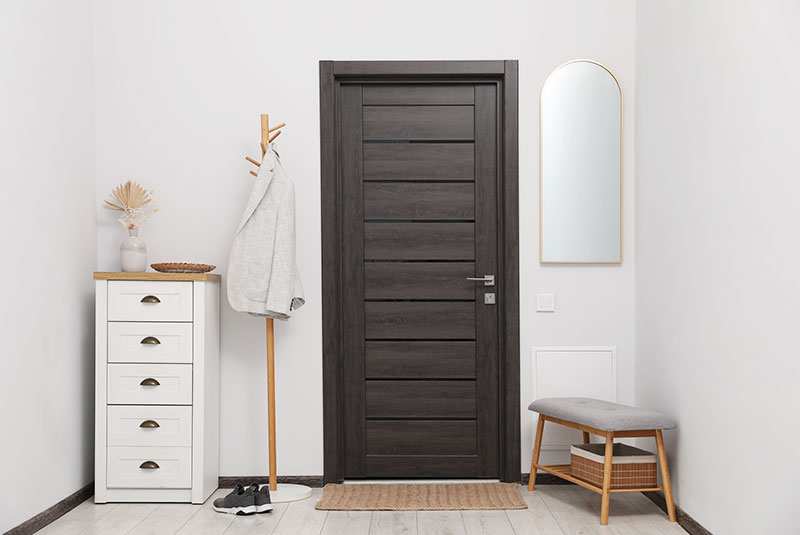
Light oak and natural wood tones work well with Scandinavian and minimalist interiors, while walnut and darker wood grains can create a more sophisticated atmosphere. White, grey, beige, and other neutral solid colors are frequently used in contemporary apartments, hotels, and offices.
The door finish should be considered together with flooring, furniture, wall colors, cabinets, and other decorative materials. Coordinating these elements can create a more unified interior environment.
4. Pay Attention to the Door Frame and Casing
A door leaf cannot perform properly without a suitable frame.
For complete door-set purchasing, buyers should confirm the frame dimensions, wall thickness range, casing or architrave design, installation method, and matching finish.
This is especially important for overseas projects because wall structures and installation practices can vary significantly between markets.
Providing accurate wall thickness and opening dimensions before production helps the manufacturer recommend an appropriate frame configuration and reduces the risk of modifications during installation.
5. Confirm Hardware Requirements in Advance
Hardware is another important part of a complete door solution.
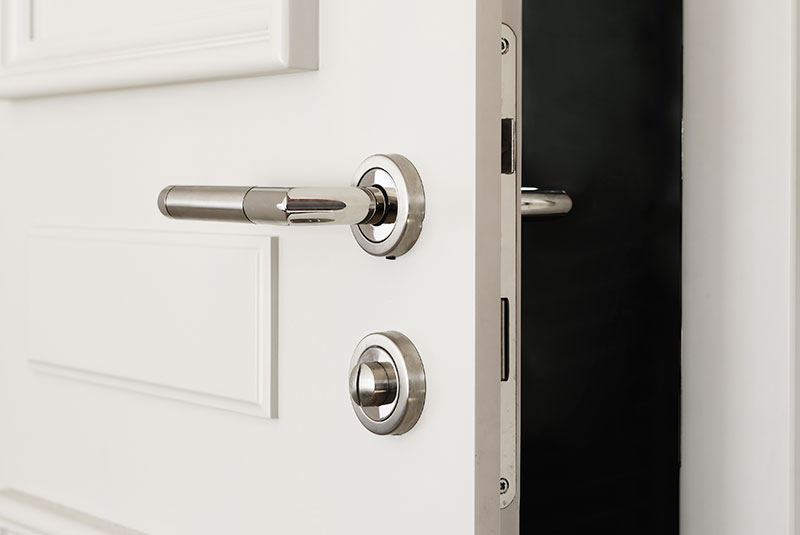
Depending on the project, a door set may require hinges, handles, locks, cylinders, magnetic locks, door closers, sealing strips, or other accessories.
When purchasing in volume, pre-machining the door leaf and frame for specified hardware can improve installation efficiency. The manufacturer can prepare hinge positions, lock holes, handle holes, and other machining according to confirmed drawings.
This can be particularly valuable for hotel, apartment, and commercial projects where installation teams need to complete a large number of doors within a limited construction schedule.
6. Consider Maintenance and Long-Term Performance
The initial purchase price is only one part of the total cost of an interior door.
Maintenance, cleaning, repair, and replacement also affect long-term project expenses. Melamine surfaces are valued for their hard, relatively easy-to-clean finish and resistance to common scratches and stains.
However, buyers should also understand the limitations of wood-based interior doors.
Proper edge sealing is important, especially where humidity is higher. Doors should not be continuously exposed to standing water unless they have been specifically designed and tested for such conditions. Selecting the correct substrate and edge treatment for the installation environment can significantly improve long-term reliability.
7. Evaluate Production Consistency for Bulk Orders
A sample door may look excellent, but large projects require consistent quality across every unit.
When sourcing hundreds of melamine door sets, buyers should consider whether the manufacturer can maintain consistent surface colors, dimensions, machining positions, edge finishing, frame specifications, and packaging across different production batches.
This is one reason factory production control is particularly important for project orders.
Before mass production, buyers can confirm approved samples, technical drawings, color references, hardware specifications, and packaging requirements. These details can then become the reference standard for production and inspection.
8. Do Not Ignore Packaging and International Transportation
For export orders, good products also need good packaging.
Interior doors have large surface areas and can be damaged by impact, moisture, incorrect stacking, or movement during transportation. Protective corners, surface protection, appropriate cartons, pallets, and other packaging solutions can help reduce transportation damage.
For complete door sets, components should also be clearly identified so that installers can easily match door leaves, frames, casings, and accessories after the shipment arrives at the project site.
For large projects, organized packaging can save considerable time during unloading, sorting, and installation.
9. Request Samples Before Placing a Large Order
For importers, distributors, and project contractors, sample evaluation is an important step before bulk purchasing.
A physical sample allows buyers to inspect the actual color, texture, edge treatment, panel quality, and overall workmanship. It can also help architects, designers, and project owners confirm whether the selected finish works with other interior materials.
Once the sample and technical specifications have been approved, both the buyer and manufacturer have a clearer standard for subsequent mass production.
10. Work with a Supplier That Understands Project Requirements
For project-based purchasing, a reliable supplier should do more than simply provide a price.
A professional melamine door manufacturer should be able to understand drawings and specifications, recommend suitable product configurations, provide samples, support customized dimensions and finishes, coordinate hardware requirements, control mass-production consistency, and prepare appropriate export packaging.
Good communication during the early stages of a project can prevent many problems later in production and installation.
Conclusion
The right melamine door set should achieve a balance between design, durability, functionality, installation efficiency, and project budget.
For residential developments, apartments, hotels, offices, and other commercial projects, melamine doors offer a flexible solution with numerous surface designs and standardized manufacturing possibilities.
Before placing a bulk order, buyers should carefully confirm the door structure, dimensions, surface finish, frame system, hardware, edge treatment, packaging, and quality requirements.
By defining these details early and working closely with an experienced manufacturer, buyers can achieve greater consistency across the project, simplify installation, and reduce unnecessary costs.
Whether you are sourcing doors for a residential development, hotel project, commercial building, or distribution business, a well-designed melamine door set can provide a practical combination of modern appearance, reliable everyday performance, and long-term value.