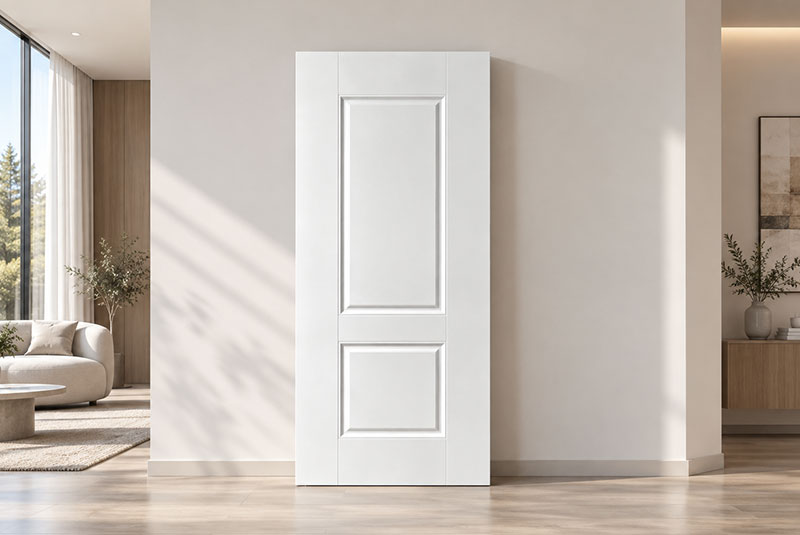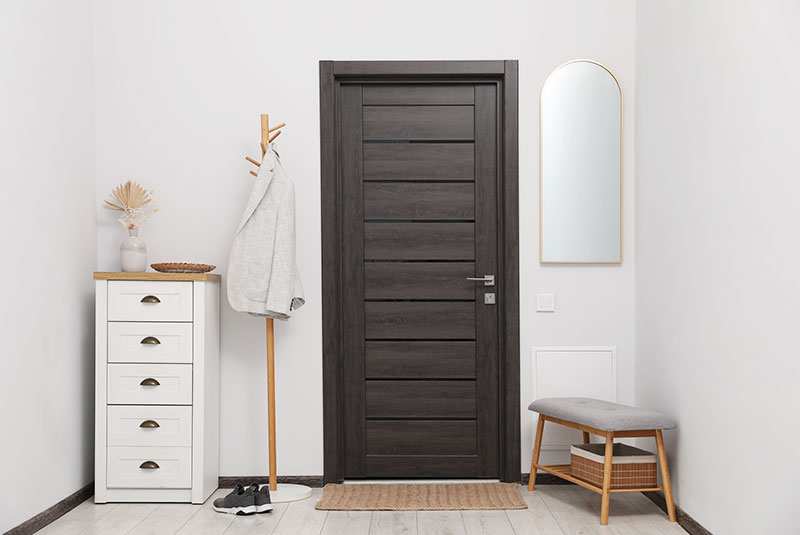
When selecting an interior door, people often focus first on the door design, surface finish, color, and material. However, the performance and user experience of a complete door system depend on much more than the door leaf itself.
Door hardware and locks are essential components that influence everyday operation, security, installation, appearance, and long-term reliability. From handles and locks to hinges and other accessories, every component plays an important role in creating a complete and functional interior door system.
For door manufacturers, contractors, developers, wholesalers, and building-material distributors, selecting suitable hardware is therefore an important part of both product development and project purchasing.
What Does Door Hardware Include?
Door hardware is a broad category covering the mechanical and decorative components used to install, operate, secure, and complete a door.
For a typical interior door system, hardware may include:
- Door locks
- Lever handles
- Hinges
- Lock bodies
- Cylinders
- Latches
- Strike plates
- Escutcheons
- Door stoppers
- Sealing accessories
- Connecting and installation components
The exact hardware configuration depends on the door type, installation environment, required function, and target market.
For example, a bedroom door may use a different locking configuration from a hotel guest-room door, office door, bathroom door, or entrance door.
Door Locks: An Essential Part of a Complete Door System
A door lock is one of the most frequently operated components of a door.
Every time a user enters or leaves a room, the handle, latch, and lock mechanism may be activated. For this reason, smooth operation and appropriate material selection are important considerations.
Interior door locks are available in many configurations depending on their intended use. Some are designed primarily for privacy, while others provide passage functions or more specific locking requirements.
When selecting a lock, buyers should consider not only appearance but also compatibility with the door thickness, lock preparation, handle configuration, installation method, and intended application.
A lock that is properly matched to the door can improve operation while reducing unnecessary installation problems.
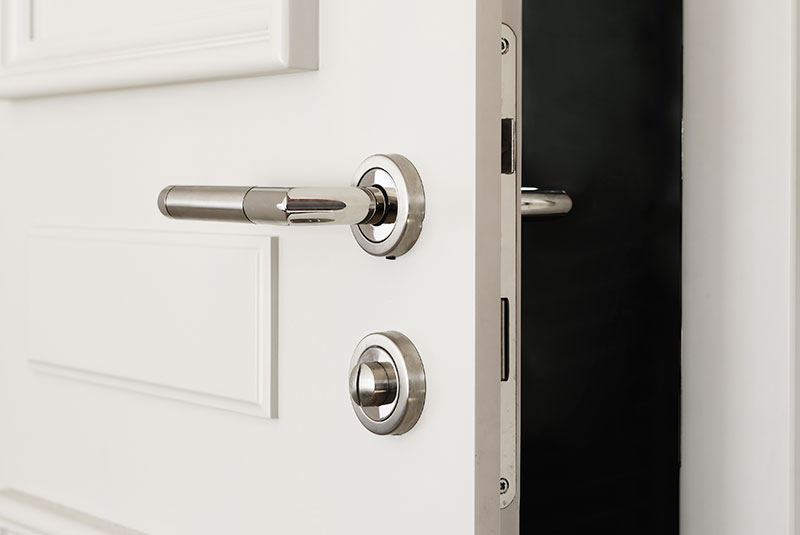
Lever Handles: Combining Function and Interior Design
Door handles are among the most visible pieces of hardware on an interior door.
Modern lever handles are available in a wide range of shapes, materials, finishes, and styles. Minimalist straight handles are popular in contemporary interiors, while curved or more decorative designs can complement traditional spaces.
Common surface appearances may include:
- Matte black
- Brushed finishes
- Satin finishes
- Polished metallic finishes
- Gold-tone finishes
- Silver-tone finishes
- Other customized decorative colors
The handle finish can be coordinated with the door surface, furniture hardware, lighting fixtures, and other interior details.
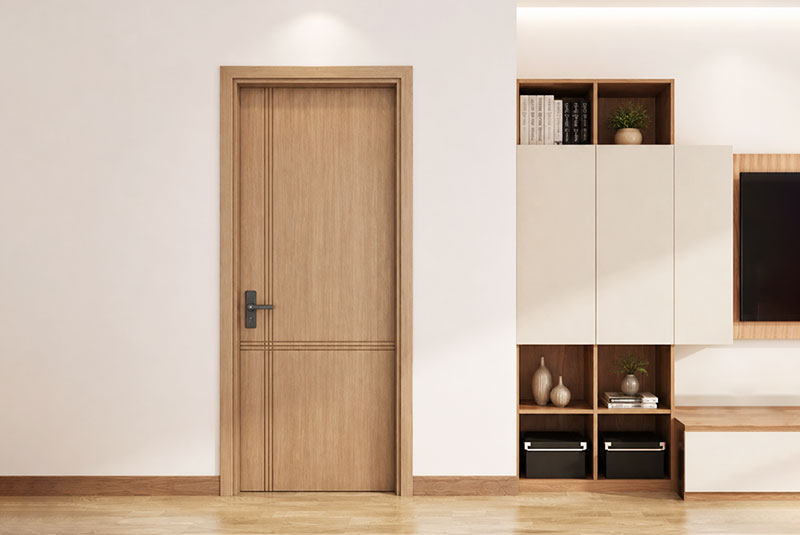
For example, a matte black handle can create a strong contrast against a light wood-grain or white melamine door, while brushed metallic finishes can provide a clean and understated appearance for modern offices and apartments.
This makes hardware an important part of interior design rather than simply a functional accessory.